info@abbasimigration.com
 +61418841225

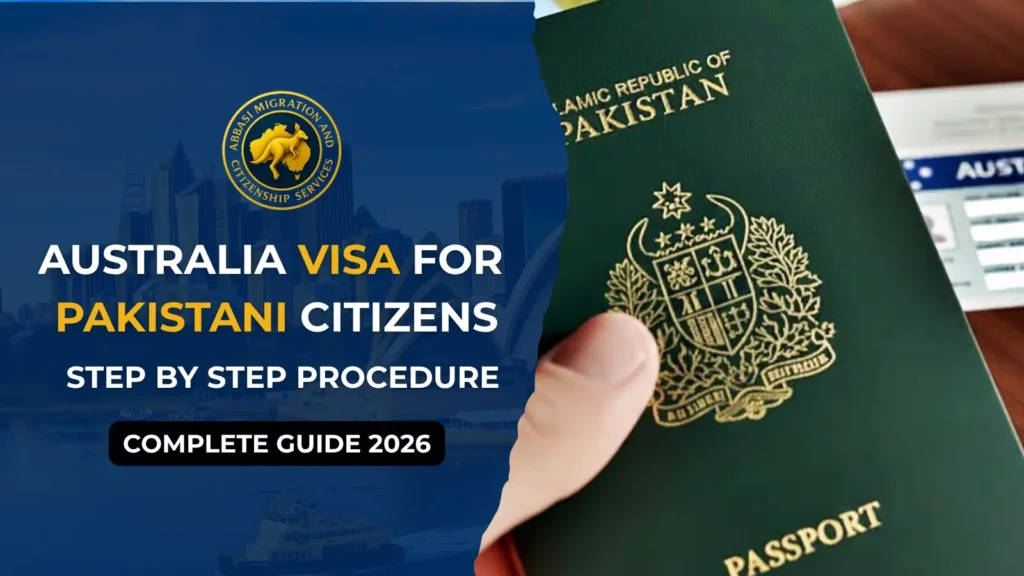
Let me tell you something upfront. Every week, Pakistani applicants come to us after a refusal they didn’t see coming. Not because their intentions weren’t genuine. Not because they couldn’t afford Australia. But because nobody told them the real picture before they applied.
This guide does exactly that. The Australia visa for Pakistani citizens is absolutely possible — across every category, from a simple visit to full permanent residency. But the standards have tightened. The Department of Home Affairs is watching Pakistani applications more closely than ever in 2026. And the difference between a grant and a refusal often comes down to preparation, not eligibility.
So here is the honest version — every major visa type, what it actually takes, what it costs, and what trips people up.
Pakistani citizens can apply for almost every Australian visa category. Which one you need depends entirely on why you’re going.
Visitor Visa is the most common application from Pakistan. It covers tourism, family visits, and short business trips. Stays are typically granted for 3 months, sometimes 6. You cannot work on this visa.
It suits people visiting family in Melbourne or Sydney, attending a wedding, or exploring Australia as a tourist. It also works for business visitors attending meetings or conferences — as long as you’re not being employed by an Australian business.
Student Visa is the most applied-for visa by young Pakistanis. It lets you study full-time at a registered Australian university, TAFE, college, or school. You can work up to 48 hours per fortnight during the study term unlimited during official course breaks.
These are points-tested permanent residency pathways. No employer needed for the 189 you’re assessed purely on your skills, age, English, and work experience. The 190 requires state or territory government nomination, which adds 5 points to your score.
Pakistani engineers, accountants, IT professionals, doctors, and nurses are among the most successful applicants on these pathways.
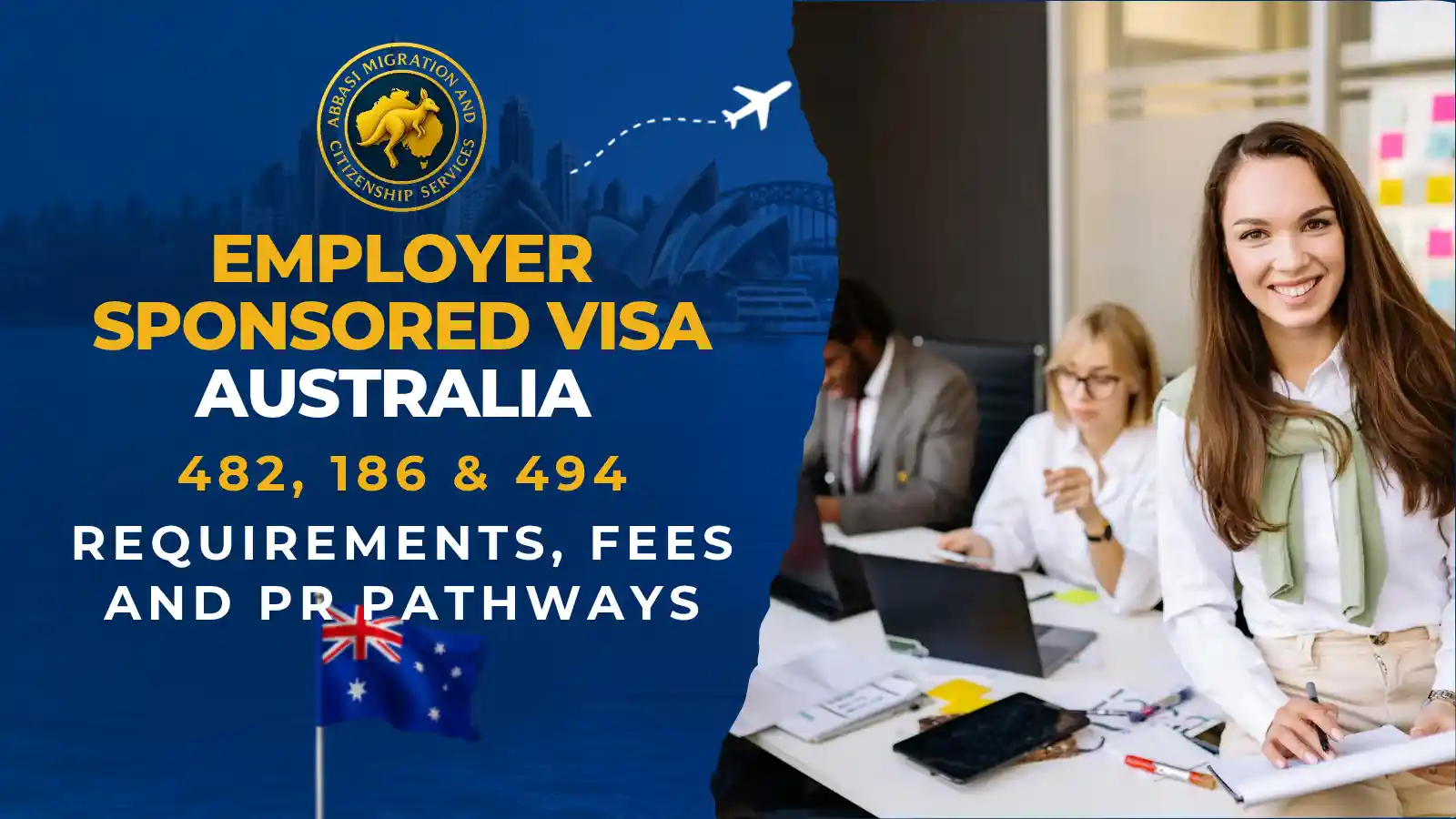
If you have a job offer from an Australian employer, the Skills in Demand Visa (482) gets you into Australia fast — sometimes within 7 to 11 days for senior roles. After 2 years with your employer, the permanent Subclass 186 pathway opens.
Your employer pays the Skilling Australians Fund (SAF) levy. If they ask you to pay it — that’s illegal under Australian law.
If you’re married to, or in a genuine de facto relationship with, an Australian citizen, permanent resident, or eligible New Zealand citizen — this is your pathway. The onshore 820 is for those already in Australia. The offshore 309 is for applicants outside Australia. Both lead to permanent residency after approximately 2 years.
Required if your layover in Australia involves leaving the international transit area. Staying airside in the transit lounge? You may not need it. Always check your specific itinerary with the Department of Home Affairs Visa Finder before assuming either way.
These requirements apply across most visa categories. Get them right and you’ve built a solid foundation. Miss one and your application stalls.
Valid passport. Your passport must be valid for the entire duration of your intended stay — and most case officers expect at least 6 months beyond your planned return date. Renew before applying if it’s close to expiry.
Financial evidence. For visitor visas, most Pakistani applicants need 6 months of bank statements showing consistent funds — around PKR 1.5 to 2 million. Not a sudden large deposit. Consistent, legitimate money over time. For student visas, you must show at least AUD 29,710 to cover 12 months of living costs, plus one year’s tuition and approximately AUD 2,000 for travel.
English language. IELTS Academic 6 or equivalent is required for most student visas. Skilled migration and employer-sponsored permanent visas require Competent English — IELTS 6.0 in each band. The 482 Skills in Demand visa now only requires IELTS 5.0 in each band for tests taken from September 2025 onwards.
Health examination. Most Pakistani applicants need a medical check with an approved panel physician. You’ll receive a HAP ID through ImmiAccount — use this to book. Results go directly to the Department; you don’t submit them yourself.
Character requirements. You need a Police Character Certificate (PCC) from Pakistan, verified by the Ministry of Foreign Affairs, plus clearances from any other country you’ve lived in for 12 months or more over the past 10 years.
Genuine Visitor or Genuine Student assessment. Since March 2024, Australia replaced the old GTE test with two separate frameworks — Genuine Visitor (GV) for visitor applications and Genuine Student (GS) for student applications. Case officers assess your personal ties to Pakistan, your reason for the visit or study, and — critically — why you’d return home. Strong ties matter enormously here.
The Subclass 500 is the most applied-for Australian visa from Pakistan. It’s also the one with the highest stakes.
The student visa allows you to stay in Australia for the duration of your course — up to 5 years — with the ability to travel in and out of Australia and work up to 48 hours per fortnight while your course is in session. Students enrolled in a master’s by research or doctoral degree have no work hour limits.
Before anything else, you need a Confirmation of Enrolment (CoE) from a registered Australian institution. Without that, there’s no application to make.
Beyond the CoE, you’ll need:
The student visa (Subclass 500) fee now stands at AUD 2,000 — making it the most expensive study visa fee across all destinations globally. At current exchange rates, that’s approximately PKR 360,000–400,000. Pay this through ImmiAccount at lodgment. It is non-refundable — even if refused.
A complete, accurate application typically processes in 4 to 8 weeks. Incomplete applications sit in the queue longer. The Department may request additional information — respond within the timeframe given or risk a refusal.
Many Pakistani families ask about the approval rate for Pakistani student applicants. The Department of Home Affairs does not publish country-specific statistics. What I can tell you from experience is this: the applications that succeed are specific, financially solid, and academically logical. The ones that fail are vague, financially suspicious, or don’t convincingly explain why this student needs to go to Australia for this particular course.
In 2026, the top reasons for refusal are a weak Genuine Student Statement with vague or copied responses, insufficient financial evidence or unverifiable proof, a course which does not logically follow an applicant’s academic history, incomplete documents and failure to meet English Language requirements
Subclass 189 — Skilled Independent. No employer, no state government. You submit an Expression of Interest through SkillSelect. If your points score is competitive — most invitations currently go to applicants with 85+ points — you’ll receive an invitation to apply for permanent residency directly.
Subclass 190 — Skilled Nominated. Same as the 189 but requires state nomination. Each state has its own occupation list. Nomination adds 5 points. Particularly useful if your score isn’t quite enough for the 189.
Subclass 482 and 186 — Employer Sponsored. If an Australian employer wants you, this is often the fastest path. The 482 gets you working in Australia quickly. After 2 years in your nominated occupation with your employer, the permanent 186 opens. You must be under 45 and meet IELTS 6.0 in each band at that point.
For all skilled migration pathways, you’ll need a positive skills assessment from the relevant Australian authority — Engineers Australia, Australian Computer Society, ANMAC for nurses, and so on. The skills assessment process takes 4 to 12 weeks depending on the authority.
English requirements matter a lot here. For permanent skilled visas, Competent English — IELTS 6.0 in each band — is the minimum. Achieving Proficient English (7.0 in each band) adds 10 points to your skilled migration score. Worth targeting if you’re close.
The Subclass 600 visitor visa covers three purposes: tourism, family visits, and business visits.
For tourism and family visits, you can stay for up to 3 to 6 months. A letter of invitation from your Australian host — along with proof of their status as an Australian citizen or permanent resident — strengthens your application. If you’re visiting family, include a copy of their passport and a declaration confirming the invitation.
For business visits, you can attend meetings, conferences, or negotiate contracts. You cannot provide services to or be employed by an Australian business.
The documents you need:
The three biggest refusal triggers on visitor visa applications: insufficient or suspicious financial evidence, a weak genuine visitor case — no job, no property, no clear reason to return — and an undisclosed prior refusal.
All fees are set by the Department of Home Affairs and reviewed every July. Always verify current amounts on the official fee page before lodging.
| Visa Type | Approximate Fee (AUD) |
|---|---|
| Visitor Visa — Subclass 600 | $200 |
| Student Visa — Subclass 500 | $2,000 |
| Skills in Demand — Subclass 482 (applicant) | $3,210 |
| Skilled Independent — Subclass 189 | $4,910 |
| Skilled Nominated — Subclass 190 | $4,910 |
| Employer Nomination — Subclass 186 | $4,910 |
| Partner Visa — Subclass 820/801-309/100 | $9,365 |
| Transit Visa — Subclass 771 | No charge |
These are government application fees only. Skills assessments, English tests, health examinations, police clearances, OSHC, biometric service charges, and migration agent fees are all additional.
Step 1 — Choose your visa type. Be honest about your purpose. Applying for the wrong visa — or one that doesn’t match your actual intention — is a fast route to refusal.
Step 2 — Check eligibility. Review the specific requirements for your chosen visa before spending money or time. If you’re unsure, get professional advice first.
Step 3 — Gather your documents. Every document must be accurate, complete, and consistent. Missing one item delays everything. Discrepancies between documents raise integrity concerns.
Step 4 — Lodge online through ImmiAccount. All Australian visa applications are submitted through immi.homeaffairs.gov.au. Complete the form carefully and pay the fee at lodgment.
Step 5 — Provide biometrics at VFS Global. After lodging, book your biometrics appointment at a VFS Global centre in Islamabad, Karachi, or Lahore. Do this promptly.
Step 6 — Complete your health examination. Use your HAP ID from ImmiAccount to book with an approved panel physician. Results go directly to the Department.
Step 7 — Respond to any information requests quickly. A request for more information is not a refusal. Respond fully and promptly within the given timeframe.
Step 8 — Await decision. Check your ImmiAccount regularly. Your Visa Grant Notice arrives by email — save it and carry a copy when you travel.
Incomplete or inconsistent documents. A missing police clearance, an unsigned statutory declaration, or different name spellings across documents can stop an application in its tracks.
Suspicious financial evidence. A sudden large deposit days before the application is a red flag. Case officers are trained to spot it. Six months of clean, consistent banking history is far more persuasive than one big transfer.
Weak Genuine Student or Genuine Visitor statement. Vague, copied, or generic statements don’t work. Your statement must explain your specific situation — why this course, why Australia, why now, and why you’ll return home.
Undisclosed information. Prior refusals, criminal history, health conditions — the Department often finds out regardless. Non-disclosure is treated more seriously than the underlying issue itself. Always disclose.
Poor immigration history. Previous visa overstays, refusals from Australia or other countries, or cancellations don’t automatically bar you — but they must be addressed directly and honestly.
Character concerns. An adverse police clearance or undisclosed criminal record significantly reduces approval chances across all visa categories.
Start early. Give yourself time to build the right financial profile, gather documents properly, and prepare your personal statements without rushing.
Be specific in every statement. Generic answers about wanting to experience Australia or pursue a better education don’t convince case officers. Explain your specific goals, your specific course or visit purpose, and your specific plan for when you return.
Show strong ties to Pakistan. Employment, property ownership, immediate family dependants, and business interests all demonstrate you have genuine reasons to return. The stronger your ties, the more convincing your case.
Maintain honest, consistent bank records. If you’re being sponsored financially by a family member, their source of funds and a clear sponsorship letter are both required — not just a balance statement.
Don’t underestimate the Genuine Student statement. For student visa applicants, this is often the deciding factor. It must be personal, specific, and logical. A statement that could apply to any Pakistani student applying to any Australian university will not work.
Work with a registered migration agent. A good agent catches document gaps before lodgment, prepares your personal statements to the right standard, and gives you an honest assessment of your approval chances — not a sales pitch.
Getting an Australia visa for Pakistani citizens right comes down to preparation and strategy not luck.
Touseef Abbasi (MARN: 2518930) at Abbasi Migration has worked with Pakistani applicants across visitor visas, student visas, skilled migration, employer-sponsored pathways, and partner visas. He speaks English and Urdu. He understands the specific challenges Pakistani applicants face — and he’ll tell you honestly what your chances look like before you spend money on an application.
What you get with Abbasi Migration:
📍 Melbourne Office: Office 3669, Ground Floor, 470 St Kilda Road, Melbourne VIC 3004
📍 Wollert Office: 11 Farmley Way, Wollert VIC 3750
📞 Phone/WhatsApp: +61 418 841 225
📧 Email: info@abbasimigration.com
Yes. Every Australian visa application — visitor, student, skilled, and partner — is lodged online through ImmiAccount. There’s no paper process. Biometrics are collected separately at a VFS Global centre in Pakistan after you lodge.
For visitor visas, most Pakistani applicants need to show PKR 1.5 to 2 million in consistent, accessible funds over at least 6 months. For student visas, you need AUD 29,710 for 12 months of living costs, plus tuition fees and approximately AUD 2,000 for travel. Sudden large deposits don’t work — consistent banking history does.
The Subclass 500 student visa fee is AUD 2,000 — approximately PKR 360,000 to 400,000 depending on exchange rates at the time of payment. It’s paid through ImmiAccount at lodgment and is non-refundable even if refused.
Yes. Pakistani professionals can apply for the employer-sponsored Skills in Demand Visa (482), the Skilled Independent Visa (189), or the Skilled Nominated Visa (190). Each requires a skills assessment, relevant work experience, and English proficiency — Competent English (IELTS 6.0 in each band) for permanent pathways.
Visitor visa: 20 to 40 days. Student visa: 4 to 8 weeks for complete applications. Skills in Demand 482 (Specialist Skills): 7 to 11 days. Core Skills stream: 4 to 8 months. Partner visa: 14 to 26 months for the temporary stage. Complete applications always process faster.
The Visitor Visa (Subclass 600) has no English test and no points test — making it the most accessible. However, it requires strong financial evidence and a convincing genuine visitor case. Pakistani applicants with prior travel to the UK, UAE, or Schengen countries tend to have stronger visitor visa profiles.
Yes. in most cases. If your visa is cancelled and you are in Australia, you can apply for a review at the Administrative Review Tribunal (ART). Strict time limits apply the deadline will be stated in your cancellation notice. Missing the deadline means losing your review right in almost all cases. ART reviews currently take 12 to 24 months to process.
No. The Electronic Travel Authority (ETA) is not available for Pakistani passport holders. All applications require a full visa lodged through ImmiAccount. Australia does not offer a traditional e-visa for Pakistan.
IELTS is the most common English test but not the only option. PTE Academic, TOEFL iBT, OET, and Cambridge C1 Advanced are also accepted. Some Pakistani students may qualify for a Medium of Instruction (MOI) letter if their most recent qualification was completed entirely in English within the past 5 years — confirm this with your institution first.
The Transit Visa (Subclass 771) is required if you plan to leave the international transit lounge at an Australian airport during a layover. If you’re staying airside and not clearing immigration, you may not need one. Check your specific itinerary with the Department of Home Affairs Visa Finder or a migration agent before travelling.
Yes — through multiple pathways. Skilled independent migration (189), state-nominated skilled migration (190), employer sponsorship (482 → 186), regional employer sponsorship (494 → 191), or partner visa (820/801 or 309/100). Each has different eligibility criteria and timelines. Contact Abbasi Migration for a personalised permanent residency pathway assessment.

We provide a comprehensive range of visa services tailored to meet the needs of individuals from all nationalities seeking to travel, study, work, family or settle in Australia.
Quick Links
Copyright © 2026 All Rights Reserved