info@abbasimigration.com
 +61418841225

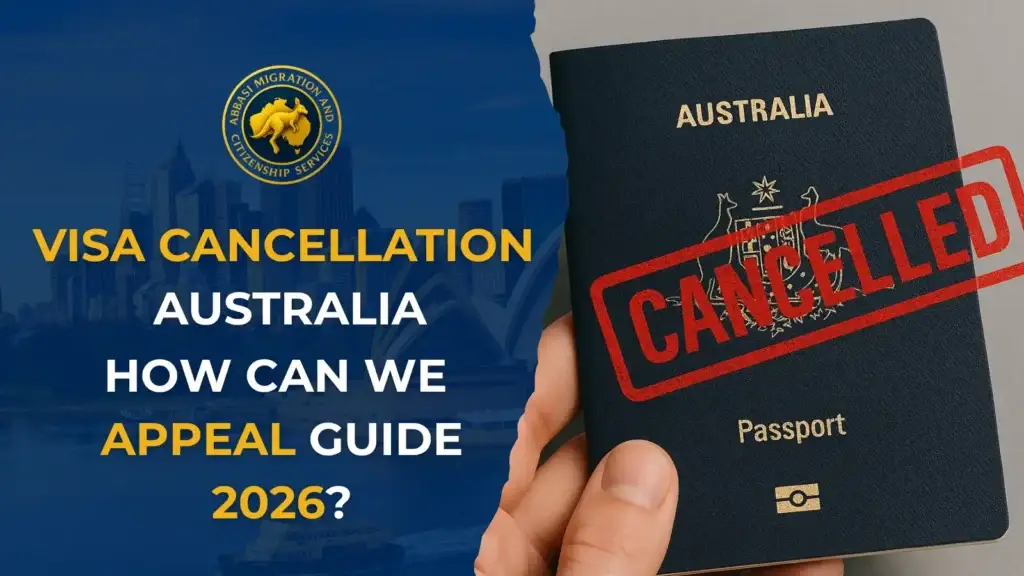
Visa cancellation Australia occurs when the Department of Home Affairs cancels a visa that was previously granted, making the holder an unlawful non-citizen. It can happen under Section 109 (incorrect information), Section 116 (general grounds), or Section 501 (character grounds). Consequences include detention, removal, future visa bans, and 3-year exclusion periods. You typically have the right to appeal to the Administrative Review Tribunal (ART).
When the Department of Home Affairs cancels your visa, it ceases to exist. You had a visa. Now you don’t.
The moment your visa is cancelled and you are in Australia, you become an unlawful non-citizen unless you hold, or are immediately granted, another substantive visa or a bridging visa. In Australia, all non-citizens must hold a valid visa at all times. No visa means you are at risk of being detained or removed from the country.
Visa cancellation is not the same as a visa refusal. A refusal means your application was rejected before a visa was granted. A cancellation means a visa that was already granted has been taken away. Both are serious but the consequences of cancellation are often more immediate and more severe.
The Department of Home Affairs has broad powers to cancel visas. The Minister or a delegate of the Minister exercises these powers. Your employer, your sponsor, or your family members cannot cancel your visa. Only the Department can.
Visa cancellations affect all types of visa holders. There is no visa category that is automatically immune. Here are the most commonly affected groups:
Student visa holders whose enrolment ends, who change courses incorrectly, or who breach attendance conditions.
Partner visa holders where the relationship has ended before the permanent visa is granted, or where there are allegations of the relationship being fraudulent.
Permanent visa holders facing character-based cancellations, often due to criminal convictions years after arriving.
Temporary worker visa holders where the employer’s nomination is withdrawn, the sponsored role no longer exists, or conditions are breached.
Visitor visa holders cancelled at the airport on arrival, or later if the Department determines the visit was not genuine.
Secondary visa holders whose visa exists only because a primary holder was granted one. If the primary holder’s visa is cancelled, yours may be cancelled too automatically.
This last point the cascading cancellation is something many people don’t know about until it’s too late. If you hold a Bridging Visa A that was granted while you held a substantive visa, and that substantive visa is cancelled, your bridging visa is also cancelled. You can go from holding two visas to holding none in a single decision.
Australian migration law provides for visa cancellations under several provisions of the Migration Act 1958. The three most important ones are Section 109, Section 116, and Section 501.
This is one of the most common grounds for visa cancellation, and one of the most surprising because it applies even if you didn’t know the information was incorrect.
Under Section 109, your visa can be cancelled if:
The part that catches people out most often is the ongoing disclosure obligation. If your circumstances change after your visa is granted your relationship ends, your employment changes, you have a child you may be required to notify the Department. Failing to do so can trigger a Section 109 cancellation.
What “bogus document” means: A bogus document includes not just outright forgeries but also documents that are genuine but being misused for example, presenting a qualification that you earned but that misrepresents the level of study completed.
The Department must issue you with a Notice of Intention to Consider Cancellation (NOICC) before cancelling under Section 109 if you are in Australia, giving you the opportunity to respond. However, if you are outside Australia, your visa can be cancelled without notice.
Section 116 gives the Department broad discretionary power to cancel a visa across a wide range of circumstances. Grounds include:
Under Section 116, the Department has discretion it may cancel, but it doesn’t have to. This is important. It means there is room to make representations. A strong response to a NOICC under Section 116, addressing the Department’s concerns and demonstrating compelling reasons why the visa should not be cancelled, can result in the Department deciding not to proceed.
Section 501 is the most serious visa cancellation provision. It applies when you fail the character test and the consequences are the most severe of any cancellation type.
You fail the character test if you:
A Section 501 cancellation can happen to permanent residents including people who have lived in Australia for decades. It can happen retrospectively when a criminal record from years ago comes to the Department’s attention.
Mandatory vs discretionary cancellations under 501: Some Section 501 cancellations are mandatory the Minister must cancel the visa. Others are discretionary. The distinction depends on the specific ground and the sentence imposed. In mandatory cases, the Minister still considers the person’s response but has no choice but to cancel if the threshold is met.
Under Section 501 cancellations, you are generally barred from lodging further visa applications while you remain in Australia. Additionally, removal from Australia on character grounds can result in permanent exclusion.
Student visa cancellations are the most frequent type of visa cancellation Australia. They arise most commonly from course and enrolment issues.
Your student visa (Subclass 500) can be cancelled if:
You are no longer enrolled in a registered course. Your enrolment ends when you complete your course even if that’s earlier than the date on your Confirmation of Enrolment (CoE). Simply because your CoE has a future date doesn’t mean your visa is safe if you’ve finished the course.
After completing your course, you don’t depart or apply for another visa within 3 months. This is a strict deadline. Day 91 puts you in breach. Many students don’t realise that completing their degree and then taking time to consider next steps without lodging another visa puts them directly at risk.
You changed courses and your new CoE has an earlier end date, and you don’t depart or apply within 28 days of completing the new course.
You are studying a course package and there’s a gap between courses of more than 2 months unless that gap falls between academic years.
Other student visa condition breaches including failing to maintain satisfactory academic progress, working more than the permitted hours (20 hours per fortnight during study periods), or being reported by your education provider.
Student visa cancellation Australia consequences include:
The news around student visa cancellations in Australia in 2025 has been significant. The Department has increased compliance activity targeting students who completed courses early during the COVID period and remained in Australia without transitioning to another visa. Many of these cancellations are now going through the ART.
A partner visa cancellation can occur at different stages of the partner visa process and the stage at which it happens changes your options significantly.
If the Department decides your relationship is not genuine before granting the temporary visa (820 or 309), your application will be refused not cancelled. However, if information comes to light suggesting the relationship was fraudulent while your application is being assessed, cancellation of your current substantive visa may follow.
This is the most common scenario for partner visa cancellation. The Department typically reviews the relationship again before deciding on the permanent stage. If the relationship has ended, the Department may cancel the temporary visa.
However, this is not automatic. The Department must consider all circumstances. If the relationship ended because of family violence, you may still be granted the permanent visa. Furthermore, if your sponsor has died, specific provisions apply that may protect your pathway to permanency.
A permanent partner visa can also be cancelled though this is less common. Grounds include providing false information about the relationship at the time of application, or meeting the character test threshold. A permanent visa cancellation does not require you to have an ongoing relationship with your sponsor the relationship requirement is assessed at the time of grant.
The same principles apply to spouse visas (married couples) as to de facto partner visas. A relationship breakdown after the temporary visa is granted but before the permanent stage is the most common trigger. Documenting the genuine nature of the relationship from the very beginning of the application not just at lodgment provides the best protection against cancellation later.
Permanent visa cancellations are less common than temporary visa cancellations but carry the most serious long-term consequences.
The most frequent grounds for permanent visa cancellation Australia are:
Character-based cancellations under Section 501. A permanent resident who receives a criminal sentence of 12 months or more even for offences committed years after arriving in Australia is subject to mandatory consideration for Section 501 cancellation.
False information at time of application. If the Department determines that a permanent visa was granted based on false or misleading information including fraudulent relationship evidence, false identity, or misrepresented employment history it can cancel the visa even decades later.
Changed circumstances. Less common for permanent visas, but possible in specific visa categories where a condition is ongoing (for example, certain business visas that require continued business activity).
The consequences of permanent visa cancellation are severe. You lose your status as a permanent resident. You may face removal from Australia. You may be subject to a permanent exclusion from Australia in the most serious character cases. And your ability to apply for any future Australian visa or even to travel to Australia may be permanently affected.
Tourist visa (Subclass 600) cancellations most frequently happen at the airport before you’ve even entered the country properly.
An immigration officer has the power to cancel a visitor visa on the spot if they form the view that:
If your visitor visa is cancelled at the airport, you may be placed on the next available flight back to your home country. You will not have an opportunity to enter Australia. Furthermore, a record of the cancellation will appear on your immigration history and must be disclosed in all future Australian visa applications.
Tourist visa cancellations can also happen after you’ve entered Australia if the Department discovers information that suggests your visit was not genuine for example, if you started working without permission while on a visitor visa.
One scenario I want to address specifically because it’s misunderstood so often: requesting a visa cancellation yourself.
People sometimes consider requesting their own visa cancellation because they’ve been granted a better visa and think they no longer need the old one, or because they want to avoid paying for an upcoming visa condition compliance.
This is almost always the wrong approach. Here’s why.
When you request visa cancellation Australia, the Department may cancel all visas you currently hold including your bridging visa. If you are waiting for another visa to be granted, cancelling your current visa removes the bridging visa that is protecting your lawful stay. You can go from lawful to unlawful immediately.
Furthermore, a voluntary visa cancellation still goes on your immigration record. It must be declared in future applications. And in some cases, a voluntary cancellation of a substantive visa triggers the Section 48 bar meaning your future onshore application options are significantly restricted.
Before you request a visa cancellation for any reason, speak to a registered migration agent first. In many cases, you don’t need to cancel your old visa at all — it simply ceases to have effect once a new visa is granted.
If you are in Australia, the Department is generally required to notify you before cancelling your visa. This notification is called a Notice of Intention to Consider Cancellation (NOICC).
The NOICC will tell you:
The timeframe in the NOICC is critical. For temporary visa holders, the timeframe is prescribed by the Migration Regulations. For permanent visa holders, you generally have 14 days to respond. In some character cases under Section 501, the timeframe can be as short as 9 days. Missing this deadline may mean you lose your right to respond and your visa is cancelled without your input.
When you respond to a NOICC, you must:
A well-constructed NOICC response genuinely changes outcomes. I’ve seen cases where the Department accepted the response and did not proceed with the cancellation. It’s not guaranteed but it’s your best opportunity to stop the process before it becomes a cancellation decision.
If your visa is cancelled, you have several potential options depending on your circumstances.
The ART (formerly known as the AAT) reviews cancellation decisions made by the Department of Home Affairs. If your visa is cancelled and you are in Australia at the time of cancellation, you generally have the right to apply for a review unless:
The time limit to apply for an ART review is strictly enforced. Your cancellation notice will state the deadline it can be as short as 9 days. The ART has very limited power to extend this time limit. If you miss it, you lose your review right in almost all cases.
While your ART review is being heard, you generally hold a bridging visa which gives you lawful status and usually some work rights while you wait for the outcome. However, confirm this with your migration agent in some character cancellation cases, the bridging visa may have restricted conditions.
ART processing times for visa cancellation reviews are currently running at 12 to 24 months in most cases, and longer in complex character matters. Plan accordingly this is not a quick process.
Depending on the grounds of cancellation and your current status, you may be able to apply for another visa while you remain in Australia. However, several barriers can restrict this option.
Section 48 bar: if you do not hold a substantive visa and your visa was cancelled on certain grounds since you last entered Australia, you can only apply for a limited list of visas onshore. These include an onshore partner visa (820/801), a protection visa, and certain bridging visas.
PIC 4013: if your visa was cancelled on certain grounds, you may be subject to a 3-year period during which you cannot be granted certain Australian visas. This can be waived if compelling circumstances affecting Australia’s interests, or compassionate circumstances affecting an Australian citizen, permanent resident, or eligible New Zealand citizen, are demonstrated.
PIC 4014: if you depart Australia as an unlawful non-citizen or on a Bridging Visa C, D, or E, a 3-year exclusion period may apply when you next try to enter Australia.
If your visa is cancelled and you do not have the right to a review, or you decide not to pursue one, departing Australia voluntarily before you become unlawful is almost always better than being detained and removed. Voluntary departure before becoming unlawful minimises the future impact on your immigration record and avoids the Section 48 bar and exclusion period provisions that apply to unlawful departures.
In rare and compelling cases, a person may seek Ministerial Intervention asking the Minister personally to exercise their discretion to grant a visa or prevent removal. Ministerial Intervention is not a formal appeal right. It is a discretionary power and is not granted in most cases. It is typically considered as a last resort after other options have been exhausted.
Not responding to the NOICC. This is the biggest mistake. If you don’t respond within the timeframe, the Department cancels your visa without considering your circumstances. You lose your best opportunity to stop the process.
Responding to the NOICC yourself without advice. A poorly constructed response one that doesn’t address the right grounds, that concedes too much, or that includes inaccurate information can make the situation worse. Get a migration agent involved before you respond.
Ignoring the cascading visa effect. People cancel their substantive visa thinking their bridging visa will protect them not realising the bridging visa ceases to exist when the substantive visa is cancelled.
Leaving Australia as an unlawful non-citizen. If you depart unlawfully, PIC 4014 may apply preventing you from entering Australia for 3 years. This can separate families and destroy careers. Regularise your visa status before departing.
Missing the ART review deadline. The ART cannot extend time limits in most cases. If you miss the 9-day or 28-day window, you have no review right. Act immediately upon receiving the cancellation notice.
Not declaring the cancellation in future applications. Every future Australian visa application asks whether you have had a visa cancelled. Failing to disclose is itself grounds for refusal or another cancellation.
Visa cancellation law is one of the most technical areas of Australian migration law. The interplay between Section 109, Section 116, and Section 501, the cascading bridging visa effects, the PIC bars, the ART timeframes these are not areas where guesswork is acceptable.
Touseef Abbasi (MARN: 2518930) at Abbasi Migration handles visa cancellation Australia matters across all visa types student visa cancellations, partner visa cancellations, permanent visa cancellations, and character-based Section 501 matters. He prepares NOICC responses, represents clients at the Administrative Review Tribunal, and advises on the best course of action based on each client’s individual circumstances.
What Abbasi Migration offers every visa cancellation client:
📍 Melbourne Office: Office 3669, Ground Floor, 470 St Kilda Road, Melbourne VIC 3004
📍 Wollert Office: 11 Farmley Way, Wollert VIC 3750
📞 Phone/WhatsApp: +61 418 841 225
📧 Email: info@abbasimigration.com
Student visa cancellations most commonly occur when a student completes their course and does not depart or apply for another visa within 3 months, when a student changes courses creating a gap of more than 2 months, when a student is no longer enrolled in a registered course, or when a student breaches other visa conditions such as working more than permitted hours or failing to maintain satisfactory academic progress.
Consequences of student visa cancellation include immediate loss of lawful status, loss of associated bridging visas, loss of work rights, a potential 3-year bar on certain future visa grants under PIC 4013, a record on your immigration history that must be disclosed in all future visa applications, and in some cases a Section 48 bar limiting future onshore application options.
Yes. Permanent visa cancellation Australia can occur under Section 501 (character grounds) where a permanent resident has received a criminal sentence of 12 months or more, or under Section 109 where the permanent visa was obtained using false or misleading information. Permanent visa cancellations have the most severe long-term consequences of any cancellation type.
Yes. Partner visa cancellation can occur if the relationship is found to be non-genuine, if the relationship ends before the permanent visa stage, or if the visa was obtained using false relationship evidence. However, family violence provisions may protect your pathway to permanent residency even if the relationship ends.
Yes. in most cases. If your visa is cancelled and you are in Australia, you can apply for a review at the Administrative Review Tribunal (ART). Strict time limits apply the deadline will be stated in your cancellation notice. Missing the deadline means losing your review right in almost all cases. ART reviews currently take 12 to 24 months to process.



We provide a comprehensive range of visa services tailored to meet the needs of individuals from all nationalities seeking to travel, study, work, family or settle in Australia.
Quick Links
Copyright © 2026 All Rights Reserved