info@abbasimigration.com
 +61418841225


Choosing where to study abroad is one of the biggest decisions you will make. If you want to study in Australia, here are ten reasons students keep choosing it, followed by the costs and visa rules you should know before you apply.
Several Australian universities, including the University of Melbourne, the University of Sydney, UNSW, Monash and ANU, appear in the top 100 of major global rankings. Degrees from Australian institutions are recognised by employers around the world.
Every provider that teaches international students must be registered on CRICOS. Australian law sets standards for how you are treated and, through the Tuition Protection Service, helps protect your fees if your provider closes.
You can study English, a vocational diploma, a bachelor’s or master’s degree, or a PhD. Vocational courses suit students who want practical, job-focused training in areas such as trades, hospitality and community services.
Student visa holders can work up to 48 hours per fortnight during the semester, and unlimited hours during scheduled course breaks. Part-time work helps with living costs and gives you local experience for your CV.
International students have the same workplace rights as everyone else in Australia, including the national minimum wage. The Fair Work Ombudsman publishes current pay rates and helps workers who are underpaid.
After an eligible course, you may be able to apply for the Temporary Graduate visa (subclass 485) to live and work in Australia. Studying in a regional area may give you access to extra time on this visa.
Many courses include work placements, industry projects and internships, so you graduate with skills employers ask for.
Australia is home to people from almost every country. Melbourne and Sydney have large South Asian communities, so you will find familiar food, mosques, community groups and support networks.
Studying in English improves your language skills every day, which helps with jobs in Australia, at home and anywhere else.
Studying in English improves your language skills every day, which helps with jobs in Australia, at home and anywhere else.
For the full requirements, see our Student Visa Subclass 500 page. If you are applying from Pakistan, read our Australia student visa from Pakistan guide.
With rapid technological advances, cybersecurity and artificial intelligence courses remain among the top choices for international students.
Australia faces a critical shortage of healthcare workers, making nursing, aged care, and medical support roles highly in demand.
As infrastructure projects expand nationwide, engineering professionals remain highly valued.
Entry requirements vary by university but generally require strong academic performance in previous studies.
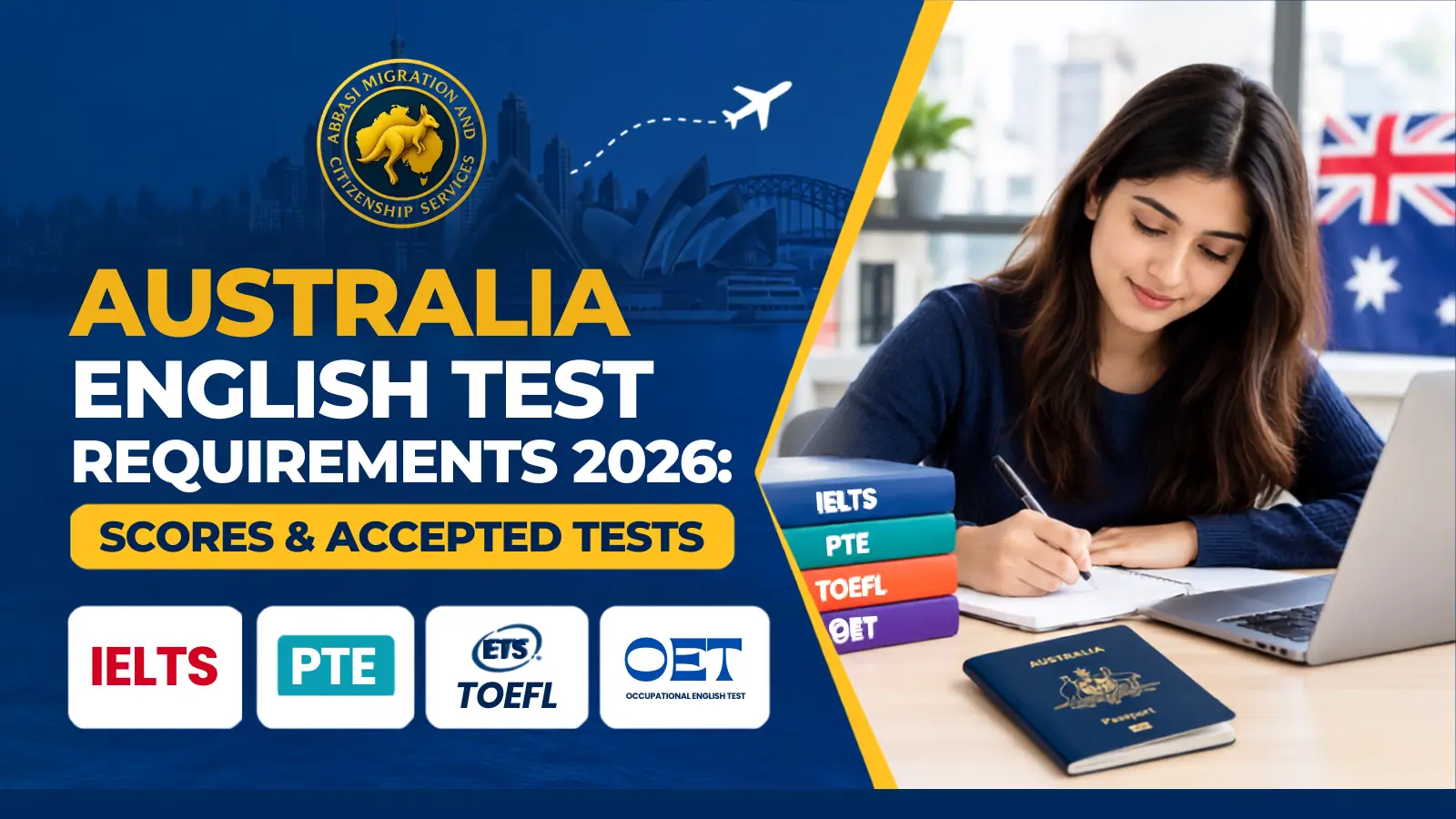
IELTS, PTE, or TOEFL results are accepted. Many universities require an IELTS score of 6.0–6.5 or PTE 50–58.
Applicants must show adequate funds to cover tuition fees, living costs, and travel.
Overseas Student Health Cover is mandatory for all international students.
Choose a course that aligns with your interests and future goals.
Common documents include academic records, ID, passport, proof of English, and financial statements.
Once accepted, the university issues a Confirmation of Enrolment.
Students submit their visa application online through the Australian immigration portal.
Book accommodation, finalize OSHC, and prepare for your new life in Australia.
Abbasi Migration proudly operates as an authorized and professional migration and education consulting agency, helping students successfully study in Australia since its founding. Their certified consultants follow MARA and ethical advisory standards.
From choosing the right course to securing university admission, Abbasi Migration ensures students receive tailored guidance every step of the way.
With years of experience in student visa handling, Abbasi Migration provides expert support to maximize approval chances.
Reviewed by Touseef Abbasi, Registered Migration Agent (MARN 2518930).
Australia is home to some of the top-ranking universities such as the University of Sydney, Monash University, and ANU. Students gain access to updated curricula, advanced research labs, and industry-focused programs designed for real-world careers.
Australia is home to some of the top-ranking universities such as the University of Sydney, Monash University, and ANU. Students gain access to updated curricula, advanced research labs, and industry-focused programs designed for real-world careers.
Australia is home to some of the top-ranking universities such as the University of Sydney, Monash University, and ANU. Students gain access to updated curricula, advanced research labs, and industry-focused programs designed for real-world careers.
Studying in Australia in 2026 is an exciting opportunity for students seeking top-quality education, excellent career prospects, and a safe, multicultural lifestyle. With updated visa policies, high-demand courses, and strong post-study work rights, Australia continues to remain a global education leader. And with a trusted partner like Abbasi Migration, students receive expert guidance from start to finish.
Yes! Australia continues to offer top-quality education, strong job opportunities, and enhanced post-study work rights.
Yes, if you take another accepted test such as PTE Academic, or if you are exempt. Passport holders from the UK, USA, Canada, New Zealand and Ireland are generally exempt.
Processing times vary, but genuine applicants often receive decisions faster thanks to streamlined systems.
Up to 48 hours per fortnight during the semester and unlimited hours during scheduled breaks. The limit is per fortnight, not 24 hours every week.
Cybersecurity, nursing, engineering, business analytics, and IT remain top choices.
Absolutely! Abbasi Migration is an authorized and trusted study visa consultant offering complete application support.
Yes, Australian universities offer multiple scholarships for international students based on merit and excellence.
From 2 October 2026, most students cannot include a partner or children. There are exceptions, such as doctoral students.




We provide a comprehensive range of visa services tailored to meet the needs of individuals from all nationalities seeking to travel, study, work, family or settle in Australia.
Quick Links
Copyright © 2026 All Rights Reserved